Today’s post is deeply personal for me as an immigrant.
I came to London when I was eighteen and I fell in love with the city. London was everything I wanted and far enough from what I knew to make me feel safe. Safe in the anonymity of it.
Nobody knew me here and I could be anyone I wanted.
Total freedom.
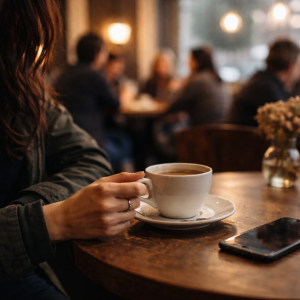
Moving countries is a little bit like dating and relationships.
Passionate and torrid at first. Everything is new and we are both on our best behavior, as we want to impress the other.
As we embarked on this affair, London gave me everything I wanted and in return, I gave London all I had.
But then, after a few years, the spark is gone. The novelty wears off and the reality of daily life, with all the boring parts, sets in. When that happens, London can be brutal and become an insatiable lover.
Always wanting more from you. Always expecting everything from you. And sometimes the cost is high, especially when you are not willing to give your everything.
Then the shift can occur and the excitement disappears. Very fast.
The relationship becomes monotonous and we just go through the motions. This is not what we signed up for and some of us start looking at the grass on the other side and wonder whether it is greener.
Furthermore, we have already moved countries once, so how hard could it be to do it again?
Right?
Wrong.
We go elsewhere in search of that new perfect partner. We feel the thrill of the chase and the fantasy of what this new chapter could be. We dream of that place where we feel like we belong as if we had always been there.
The fantasy is so appealing that we forget how hard it was in the first place.
What happens when the fantasy of “a new life” gives way to the lived reality of migration?
There are different kinds of migrations: the ones that are forced on us, either by circumstances like war, family, financial constraints, etc. And the ones we “choose” or thought we did because it was the only viable option we saw at the time.
I moved aged eighteen and, for a good decade, whenever anyone asked me about my choice, my answer was always the same: “I love it here.”
It was only one Sunday afternoon talking to a friend and fellow immigrant about our reasons to be in London that I realised I did not really choose to leave my country of birth behind.
Sometimes, “choice” is linked to a deeply rooted survival instinct, buried out of awareness. What to others may look like a choice can be shaped by a need for self-preservation, distance and separation.
Chosen is not always free.
When this happens, the real experience of the immigrant is often missed by those who chose to stay.
You live a glamorous life there — they say.
You abandoned your family or origin and all your responsibilities — they say.
You chose to leave — they say.
Many times, the departure was a need for survival, for space, a last resort to preserve self-identity.
And what those people do not see is the impact on that identity.
Nobody tells you how painful it can be to miss birthdays, celebrations of big and small events, conversations that take place over a cup of coffee after lunch.
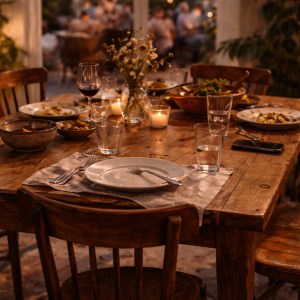
Becoming the outsider. In the periphery.
Nobody stops to think that when you choose a country and a life away from your roots, there is also grief.
The grief that comes with the choice made while leaving the other behind.
The moments
The culture
The places that grounded you
The times you are missed in your new culture
Conflicted between making a point and adapting to the norm.
Having to learn a new language and I am not only referring to the language spoken in the chosen country, but the “unspoken language” that weaves the cultural norms.
The one you learn the hard way when someone asks you how you are but they are not really listening when you are sharing your experience.
The language that makes relationships a new minefield where all the rules are new in a game you do not know how to play.
And that is not the only place where we lose a part of ourselves.
What gets left behind when we leave, and what parts of us become harder to locate?
I hear so many of my clients sharing their own experience of feeling left out, getting second hand news. Being part of a conversation where they feel invisible because they left and they are not part of the daily fabric of that life anymore.
Feeling the effort is one-sided while questioning their need for contact with the parts of their life that they left behind.
Feeling like they are alone with it, they fantasise about the difference once they are again in the same shared space.
And yet, they go back and feel like they are new to the place even though they know the streets they walked so many times in a life that seems so far away. They still feel on the outside looking in while trying to mould themselves like a puzzle piece to fit into the life of those who were left behind.
Then the feeling of being alone whilst surrounded by a crowd of familiar faces hits even harder.
What happens when we do not feel home anywhere?
When we lose what we thought we once had, even if it was only an illusion and we realise that we do not fit, neither here nor there.
When that happens…
Can home be a person?
Or maybe a feeling?
Nearly three decades and over five countries later, I am still figuring that out.
If this resonates, I’d love to hear your thoughts.
I am Marta Carbajo Gutiérrez, a UKCP-accredited Gestalt psychotherapist, working with individuals and groups in London and online. You can find out more about my way of thinking on my substack at Kintsugi Mind.